
What Is Precision Engineering? Processes, Tolerances and Applications
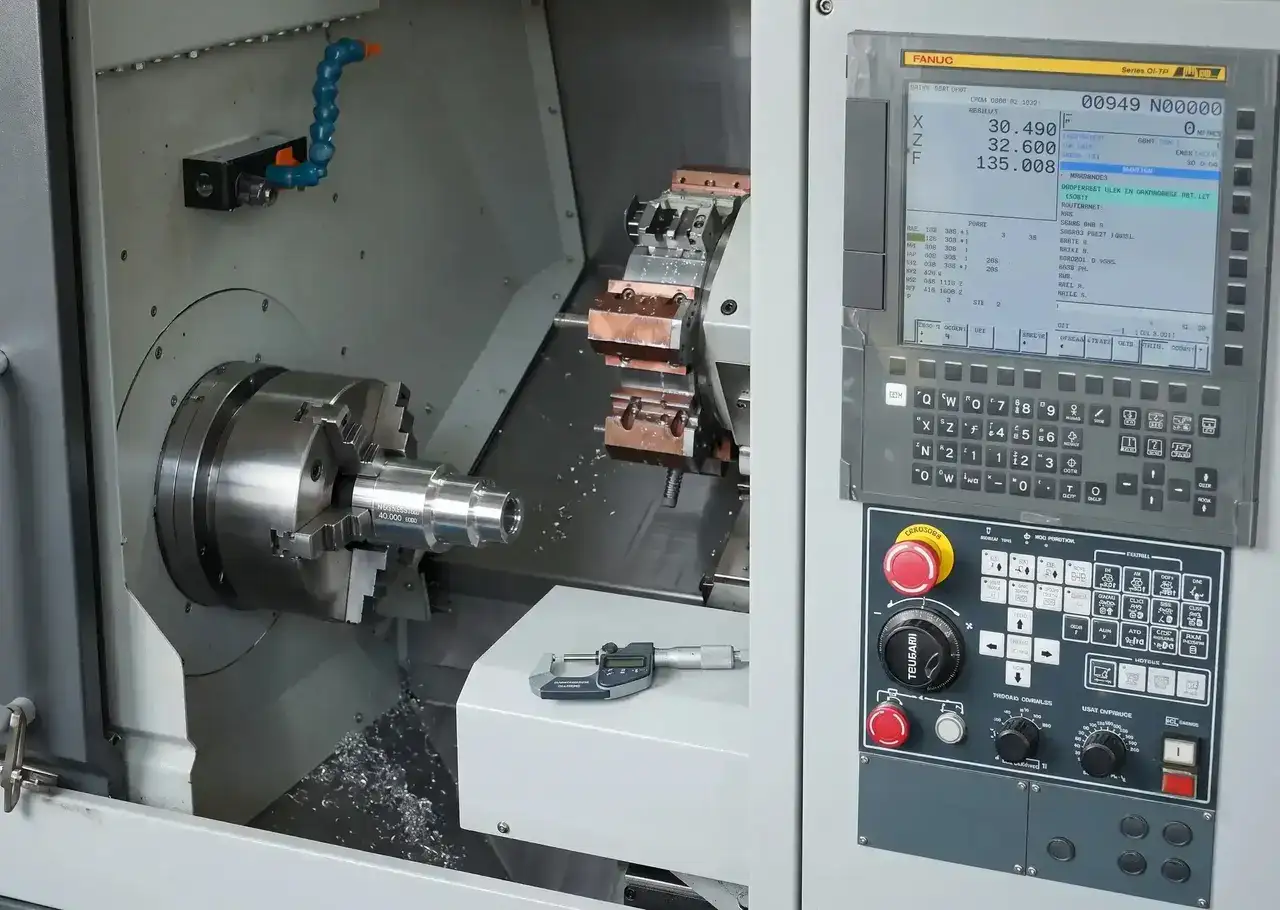
Precision engineering is the discipline of designing and manufacturing components to controlled dimensions, tolerances and functional requirements. It becomes important when a small dimensional variation can affect assembly, movement, electrical contact, alignment or the performance of the finished equipment.
Unlike general fabrication, precision engineering is built around controlled manufacturing. The drawing, material, machining method, dimensional tolerances, inspection process and final application all need to work together. For manufacturers of precision metal components, this approach helps turn an engineering requirement into a repeatable component that can be produced consistently.
What Does Precision Engineering Mean?
Precision engineering focuses on achieving the dimensions and characteristics specified for a component while maintaining consistency from one production batch to another. The required level of precision depends on the application. A component used in a simple assembly may allow a wider tolerance, while a mating or alignment component may require much tighter control.
The important point is that precision does not simply mean making every dimension as small as possible. It means producing the right dimension, within the specified tolerance, for the intended function.
Why Are Tolerances Important?
A technical drawing normally specifies nominal dimensions together with allowable variation. This allowable variation is the tolerance. It defines the acceptable manufacturing range and gives the production team a measurable target.
- Fit: Correct tolerances help mating components assemble without excessive looseness or interference.
- Alignment: Controlled dimensions help maintain the position of components within an assembly.
- Repeatability: Consistent tolerances make components from different production batches interchangeable where the design requires it.
- Function: Dimensional accuracy can directly influence movement, contact, sealing or mechanical operation.
- Quality control: Defined tolerances provide measurable acceptance criteria during inspection.
Tolerances should therefore be considered part of the engineering requirement rather than something added only after machining is complete.
Key Stages in Precision Component Manufacturing
1. Understanding the Engineering Requirement
Manufacturing starts with understanding the component drawing, material specification, critical dimensions, tolerances, surface requirements and intended assembly. A clear interpretation of the drawing reduces the risk of producing a dimensionally correct component that does not perform correctly in the final application.
2. Selecting the Manufacturing Process
The geometry of the component determines which process is appropriate. Turning is generally suited to rotational features, while milling is useful for flats, slots, pockets, profiles and other non-rotational features. More complex components may require a combination of operations.
3. Controlling the Machining Process
Machine setup, tooling condition, workholding, cutting parameters and process sequence can all influence dimensional consistency. A stable process is especially important when a component contains several related dimensions that need to remain within their specified limits.
4. Inspection and Verification
Inspection confirms whether the manufactured component meets the drawing requirements. Depending on the component, this can involve dimensional measurement, visual checks, thread verification, surface inspection and other appropriate methods.
Precision Engineering Is More Than Dimensional Accuracy
A component can meet an individual dimension and still create problems if other characteristics are not controlled. For example, surface finish, burrs, concentricity, flatness, thread quality or the relationship between two features may influence how a component behaves during assembly.
For this reason, precision manufacturing should be viewed as a complete process rather than a single machining operation. The objective is to control the characteristics that matter to the final application.
Where Is Precision Engineering Used?
Precision metal components are used across industries where reliable fit, repeatability and controlled dimensions are important. Typical applications include electrical assemblies, industrial equipment, automotive systems, sensors, machinery and engineered assemblies.
The manufacturing approach changes according to the application. An electrical component may place greater emphasis on material properties and contact geometry, while a mechanical component may place greater emphasis on fit, alignment and dimensional stability.
How Manufacturers Improve Consistency
Consistent results come from controlling the complete production workflow. Useful practices include clear drawing interpretation, suitable process planning, stable machine setups, appropriate tooling, in-process checks and final inspection.
Documentation also matters. When production requirements and inspection criteria are clearly defined, quality teams can evaluate components against the same requirements instead of relying on subjective judgement.
Precision Engineering and Quality Management
A structured quality management approach supports repeatable manufacturing by establishing controlled processes, responsibilities and records. DIPAK SALES is certified to ISO 9001:2015 for a scope covering the manufacture of precision metal components.
For customers, the practical value of a controlled quality system is that manufacturing is approached as a process that needs to be monitored and improved, rather than as a one-time machining activity.
Frequently Asked Questions
What is a precision component?
A precision component is a manufactured part produced to defined dimensions and tolerances so that it can perform its intended function consistently within an assembly or system.
Why are engineering tolerances necessary?
Tolerances define the acceptable dimensional variation for a component. They help manufacturers produce parts that fit, function and remain consistent with the engineering design.
Does precision engineering only mean CNC machining?
No. CNC turning and milling are important precision manufacturing processes, but precision engineering also involves drawing interpretation, material selection, process planning, inspection and quality control.
Conclusion
Precision engineering connects engineering design with repeatable manufacturing. The right process, controlled tolerances, suitable materials and effective inspection all contribute to a component that performs as intended. For precision metal manufacturing, the focus should not be on one isolated machining step but on controlling the complete path from engineering requirement to verified component.


