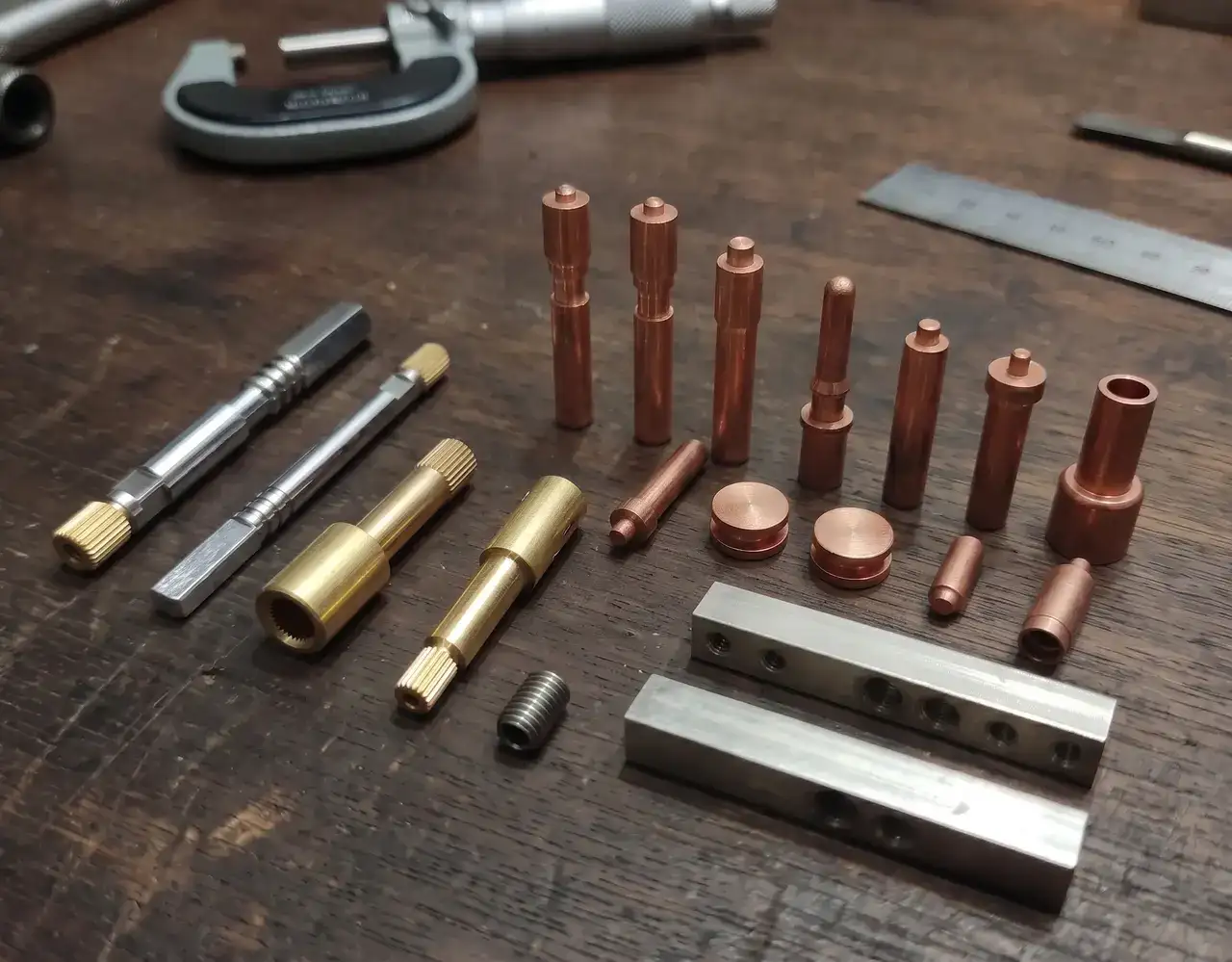
CNC Turning or Milling? How Part Geometry Shapes the Machining Process

The shape of a metal component often tells you more about the suitable machining process than its material name does. A rotational part with a central axis presents a different manufacturing problem from a component containing flats, pockets and features spread across several faces.
CNC turning and CNC milling are both established precision machining processes, but they approach the workpiece differently. Understanding that difference helps when planning a component for efficient and repeatable production.
Turning Revolves Around the Part Axis
In CNC turning, the workpiece rotates while cutting tools remove material from the component. This makes the process particularly suitable for cylindrical and rotational geometries.
External diameters, internal bores, shoulders, grooves and threads can often be produced efficiently when they are arranged around a common axis.
Milling Works From the Tool Side
CNC milling uses rotating cutting tools to remove material from a stationary or positioned workpiece. It is useful when the component contains flats, slots, pockets, holes and profiles that cannot be produced efficiently through simple turning.
The ability to approach different surfaces gives milling flexibility for components with more varied geometry.
Geometry Is the First Question
Before choosing a process, it helps to look at the dominant shape of the component.
| Part characteristic | Process that may suit it |
|---|---|
| Long or short cylindrical profile | CNC turning |
| External diameters and shoulders | CNC turning |
| Rotational grooves or threads | CNC turning |
| Flat faces and slots | CNC milling |
| Pockets and non-rotational profiles | CNC milling |
| Parts combining both types of features | Multiple operations or a suitable combined process |
When One Process Is Not Enough
Real components do not always fit neatly into one category. A turned component may later need a flat, cross-hole or another feature that requires a secondary operation.
In these cases, process planning becomes important. The manufacturer needs to consider how the component will be held for each operation and how the second setup will preserve the relationships established during the first.
Material Still Matters
Geometry may determine the basic process, but material affects how that process behaves. Brass, copper, aluminium, stainless steel and mild steel can have different cutting characteristics, tooling requirements and surface-finish behaviour.
That means process selection should consider both the shape of the component and the material from which it will be produced.
Precision Is a Process Capability Question
A drawing may specify tight dimensional requirements, but the manufacturing process must be capable of achieving them repeatedly. Machine condition, tooling, workholding, setup and inspection all contribute to the result.
For critical features, it is useful to decide during process planning how the dimension will be produced and how it will later be verified.
Designing a Part That Is Easier to Machine
Manufacturability can often be improved without changing the function of the component. Practical feature sizes, accessible surfaces, sensible tolerances and clear datum references can reduce unnecessary production complexity.
It is also worth considering whether a feature genuinely needs a tight tolerance. A design that controls only functionally important characteristics can be easier to manufacture consistently.
A Process Selection Checklist
- Is the dominant geometry rotational?
- Which surfaces require milling or drilling?
- Can critical features be produced in one setup?
- Will a secondary operation be required?
- Does the material affect tooling or cutting conditions?
- Which dimensions are functionally critical?
- How will those dimensions be inspected?
Machining Is More Than Choosing a Machine
The decision between turning and milling is really a process-planning decision. Geometry, material, tolerances, workholding and inspection all contribute to the most practical manufacturing route.
When these factors are considered before production, the machining process can be aligned more closely with the component's actual requirements, supporting consistent results without adding unnecessary operations.