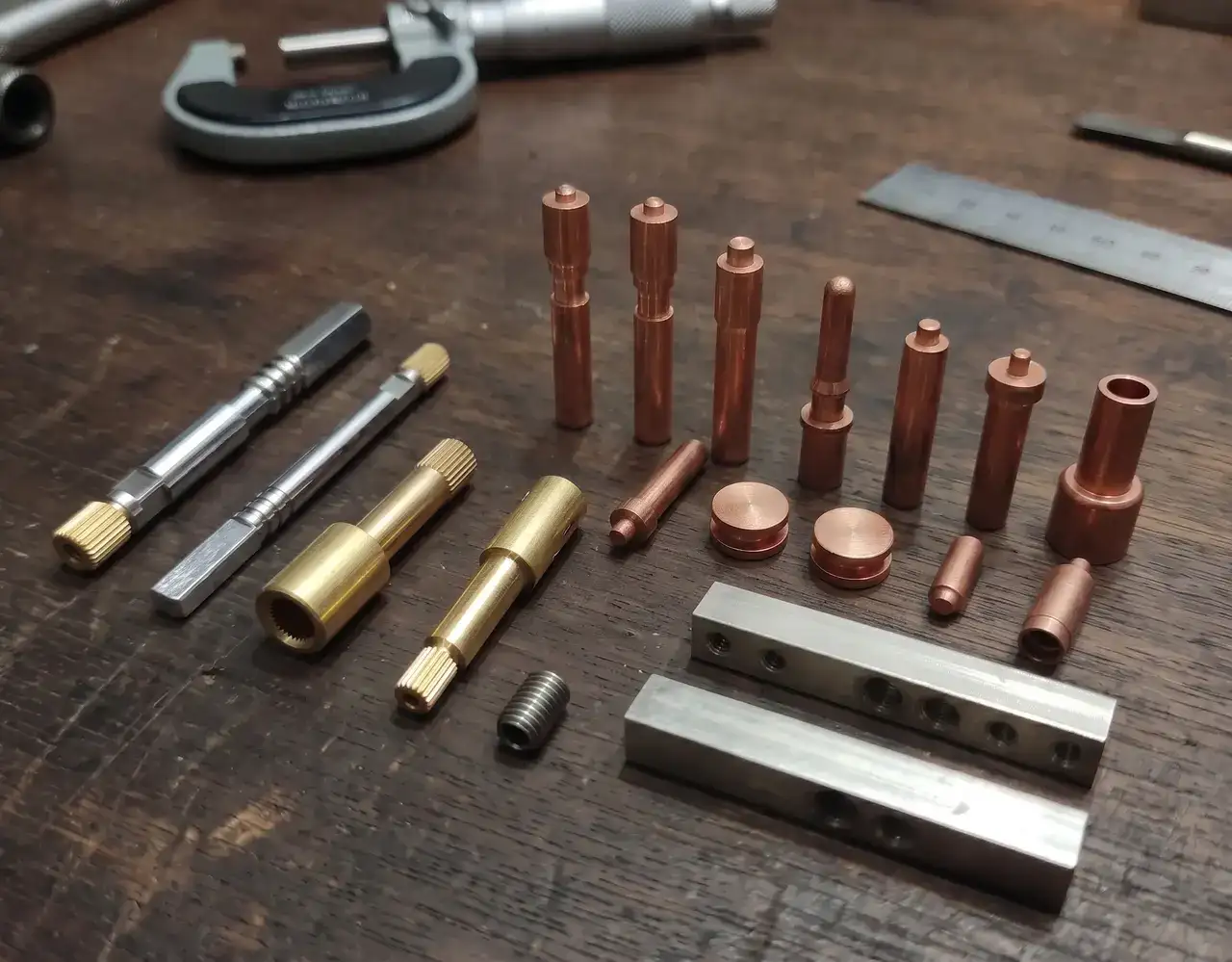
How Industrial Manufacturers Build Consistent Precision Metal Components

Consistency is one of the biggest challenges in industrial component manufacturing. Producing one accurate metal component demonstrates capability, but producing the same component repeatedly with controlled dimensions requires a much more disciplined production approach.
For industrial applications, small variations can affect assembly, interchangeability and downstream production. That is why precision manufacturing depends on more than machining equipment. Engineering information, process planning, tooling, workholding and inspection all have to work together.
Production Starts Before the Machine
A repeatable manufacturing process begins with a clear understanding of the component requirement. The drawing or technical specification should identify the material, dimensions, critical tolerances and features that affect the final application.
At this stage, it is useful to distinguish between dimensions that are functionally important and those that have more flexibility. That distinction helps the manufacturing team focus process control where it actually matters.
Turning Geometry Into a Manufacturing Route
Once the component has been reviewed, the manufacturing route can be planned around its geometry. Rotational features may suit CNC turning, while holes, slots, flats and other profiles may require milling or drilling.
When several operations are needed, the sequence matters. Each setup creates another opportunity for dimensional variation, so the process should be arranged to preserve important relationships between features.
The Small Details Affect Repeatability
Repeat production is influenced by practical factors that are easy to overlook. Tool wear, workholding, machine condition, material behaviour and setup changes can gradually affect dimensions even when the original process was correct.
This is why production control should concentrate on characteristics that have a direct effect on fit and function. Monitoring everything equally is not always the most effective approach.
Inspection Is Part of the Process
Inspection should not be treated only as the final step after machining. Critical characteristics can be considered during process planning so that the manufacturing team knows how they will be verified.
Depending on the component, useful inspection points may include critical diameters, hole positions, threads, lengths, locating surfaces and other specified features. The measurement method should suit the feature and its tolerance.
Material and Process Must Agree
Different metals behave differently during machining. Brass, copper, aluminium, stainless steel and mild steel each bring their own combination of mechanical, electrical and machining characteristics.
A manufacturing route that works well for one material may need different tooling or process conditions for another. Material specification and process planning should therefore be considered together.
What Makes a Production Process Stable?
- Clear engineering specifications and controlled revisions
- Suitable material and material grade
- Defined machining operations and setups
- Appropriate tooling and workholding
- Control of functionally important tolerances
- Inspection criteria linked to the drawing
- Monitoring of repeat-production variation
From Initial Approval to Recurring Production
The first approved component provides evidence that the design and process can work together. Recurring production adds another requirement: the same result must remain achievable as tooling wears, batches change and production continues.
A controlled manufacturing process creates a clearer path between the approved component and future production batches. It also makes it easier to identify where variation is occurring when a result moves outside the expected range.
Why Process Discipline Matters to Industrial Buyers
Industrial buyers are often concerned with more than whether a component can be manufactured. They also need confidence that repeat orders will remain consistent and that technical requirements can be understood and verified.
Clear documentation, defined processes and appropriate inspection provide a stronger foundation for that confidence than relying on a single successful production run.
Conclusion
Consistent industrial manufacturing is the result of a connected process. Engineering requirements need to translate into practical machining operations, controlled production conditions and meaningful inspection. When those elements support each other, precision metal components can be produced with greater repeatability across ongoing industrial requirements.