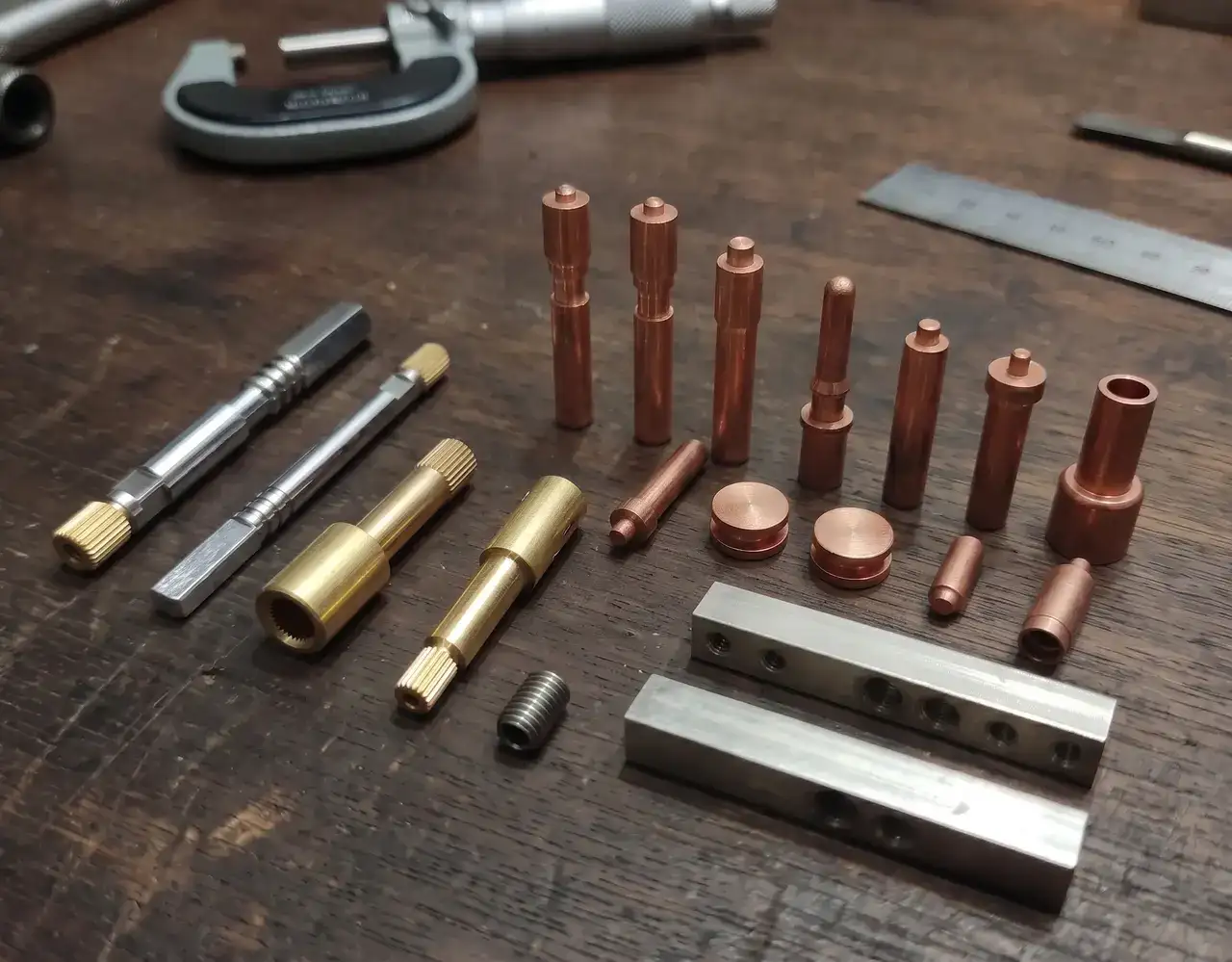
From Custom Requirement to Repeat Order: A Practical OEM Manufacturing Workflow

An OEM manufacturing project often begins with a requirement rather than a finished production plan. The customer may provide a technical drawing, sample, specification or application information. The manufacturer then has to translate that input into a process capable of producing the required component consistently.
The transition from one custom requirement to a repeat order is where a manufacturing relationship becomes more structured. Each stage needs to preserve the original engineering intent while making the production process practical and repeatable.
1. Understanding the Requirement
The first stage is technical review. The component's dimensions, material, tolerances, threads, surface requirements and other functional characteristics need to be understood before manufacturing decisions are finalized.
The intended application also provides useful context. Knowing how the component fits into a larger assembly can help identify which features are likely to be critical during production.
2. Reviewing Samples or Existing Components
When a sample is available, it can provide useful physical information about the component. However, a sample alone may not communicate every requirement that matters to the finished assembly.
Where technical documentation is available, it should remain the primary manufacturing reference. If information is unclear, the requirement should be clarified rather than replaced with an assumption.
3. Choosing a Practical Production Method
Manufacturing method depends on the component's geometry, material, tolerances and expected quantity. CNC turning may suit rotational parts, while milling and drilling can support components with additional profiles or holes.
For a custom OEM component, the most suitable route is not necessarily the one with the fewest operations. A slightly different sequence may provide better control of critical dimensions or make repeat production more stable.
4. Initial Production and Verification
The first production stage provides an opportunity to verify that the selected process can produce the intended component. Critical dimensions and functional features should be checked against the defined requirements.
This stage can also reveal practical manufacturing issues that were not obvious during drawing review. Addressing them before recurring production can prevent the same problem from being repeated across larger quantities.
5. Moving Into Repeat Production
Once the component and process are approved, repeat production becomes a matter of maintaining the established requirements. Tool condition, setup consistency, material control and inspection all contribute to keeping later batches aligned with the approved specification.
For OEM applications, this consistency is particularly important because the same component may be integrated into many finished units over an extended production period.
What Should Remain Controlled?
| Area | Why it matters |
|---|---|
| Drawing revision | Prevents production against outdated requirements |
| Material specification | Keeps the component's intended properties consistent |
| Critical dimensions | Protects fit and functional relationships |
| Process setup | Supports repeatable manufacturing conditions |
| Inspection criteria | Provides an objective basis for verification |
Communication Does Not End After Approval
OEM requirements can change during the life of a project. A drawing revision, material change, dimensional adjustment or production-volume change can affect the manufacturing process.
Keeping technical information controlled makes these changes easier to manage. It also reduces the risk of producing a component that is technically accurate but no longer matches the current project requirement.
When a Custom Part Becomes a Long-Term Component
A successful OEM project can move from an initial custom requirement into recurring supply. At that point, manufacturing consistency becomes part of the value of the relationship.
The focus shifts from simply proving that the component can be made to maintaining the same functional characteristics over repeated batches. Stable processes and clear technical references help support that transition.
What a Strong OEM Manufacturing Process Looks Like
- Technical information is reviewed before production decisions are made.
- Critical functional characteristics are identified.
- Material and manufacturing methods are selected against the requirement.
- Initial production is verified against the approved specification.
- Production controls are established for recurring quantities.
- Revisions and changes remain documented and controlled.
Final Perspective
OEM manufacturing is not simply the production of a custom metal part. It is the controlled translation of an engineering requirement into a repeatable supply process. When technical communication, process planning, verification and production control remain connected, a one-time requirement can develop into a dependable long-term manufacturing program.