
Copper vs Aluminium in Electrical Components: Key Material Considerations
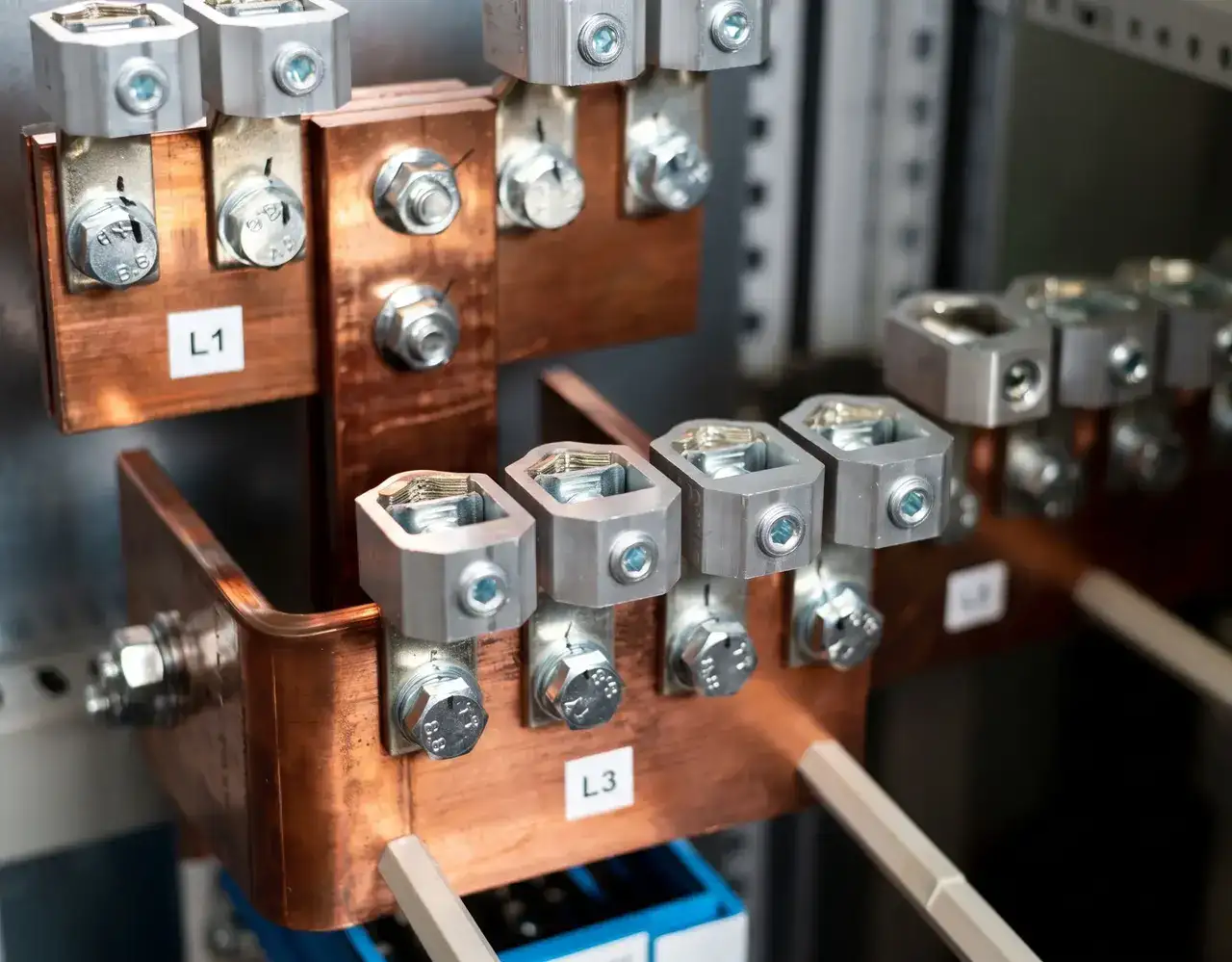
Copper and aluminium are both important materials in electrical engineering, but they are not interchangeable in every application. Their electrical, mechanical, thermal and manufacturing characteristics differ, so the appropriate choice depends on what the component needs to do inside the finished equipment.
For engineers and manufacturers, the useful question is not simply which material is better. The more practical question is which material provides the right balance of conductivity, weight, mechanical performance, connection behaviour and manufacturability for the intended application.
Start With the Electrical Requirement
Electrical conductivity is one of the first properties considered when comparing copper and aluminium. Copper has higher electrical conductivity by volume, while aluminium provides useful conductivity with substantially lower density.
This difference becomes important when component size and weight are part of the design. The required conductor dimensions should therefore be considered together with the electrical load rather than selecting material from conductivity values alone.
Where Copper Has an Advantage
Copper is often selected when high electrical conductivity and compact conductive paths are important. It is also widely used in electrical connection and current-carrying applications where its established performance is suitable for the design.
From a manufacturing perspective, copper can be produced into different component geometries, including formed and machined parts. The final manufacturing route depends on the component shape, material condition and required dimensional characteristics.
Where Aluminium Can Make Sense
The main attraction of aluminium is its low density. For applications where reducing component weight matters, aluminium can provide a useful combination of conductivity and mass.
However, using aluminium also means paying attention to connection design, surface condition, mechanical requirements and the behaviour of the joint. These factors become particularly relevant when aluminium is connected to other metals.
A Practical Comparison
| Consideration | Copper | Aluminium |
|---|---|---|
| Electrical conductivity | Higher conductivity by volume | Lower than copper by volume |
| Density | Higher | Much lower |
| Weight-sensitive designs | May require more mass for an equivalent conductive requirement | Can be advantageous where low weight matters |
| Machining | Machining behaviour depends on grade and geometry | Machining behaviour also depends on grade and geometry |
| Connection design | Requires appropriate joint and surface considerations | Requires particular attention to joint and surface conditions |
The Connection Changes the Material Decision
An electrical component rarely works in isolation. It connects to another conductor, terminal, fastener or contact surface. The interface between these materials can be just as important as the bulk properties of the conductor.
Joint pressure, contact area, surface condition, thermal expansion and the surrounding environment can influence long-term connection performance. A material comparison that ignores the joint can therefore produce an incomplete engineering decision.
Manufacturing Considerations
The shape of the component should be considered before selecting the manufacturing process. A simple conductive bar may require a different production route from a precision component containing holes, threads, slots or formed features.
Material choice can also influence tooling, cutting conditions, burr formation, surface finish and dimensional consistency. For repeat production, these manufacturing characteristics need to be considered during process planning rather than after the material has already been specified.
When Should You Prefer One Over the Other?
Copper can be a strong candidate when compact conductive paths, high conductivity and established electrical performance are important. Aluminium becomes attractive when low mass and suitable electrical performance need to be balanced together.
Neither statement replaces engineering evaluation. The correct choice depends on current requirements, available space, weight, connection method, mechanical loads, temperature and the environment in which the component will operate.
Questions to Resolve Before Final Material Selection
- What current will the component carry?
- How much space is available for the conductive section?
- Is component weight a significant design constraint?
- How will the component connect to adjacent parts?
- What mechanical loads will the joint experience?
- What temperature and environmental conditions are expected?
- Which manufacturing process is required for the component geometry?
Final Takeaway
Copper and aluminium can both be effective materials for electrical components, but they solve different engineering priorities. Copper generally offers higher electrical conductivity, while aluminium provides a significant weight advantage. The best material is the one that meets the electrical requirement while also supporting the mechanical, connection, environmental and manufacturing needs of the complete assembly.


