
Recent Products

Brass Precision Parts
Brass Precision Turning Parts
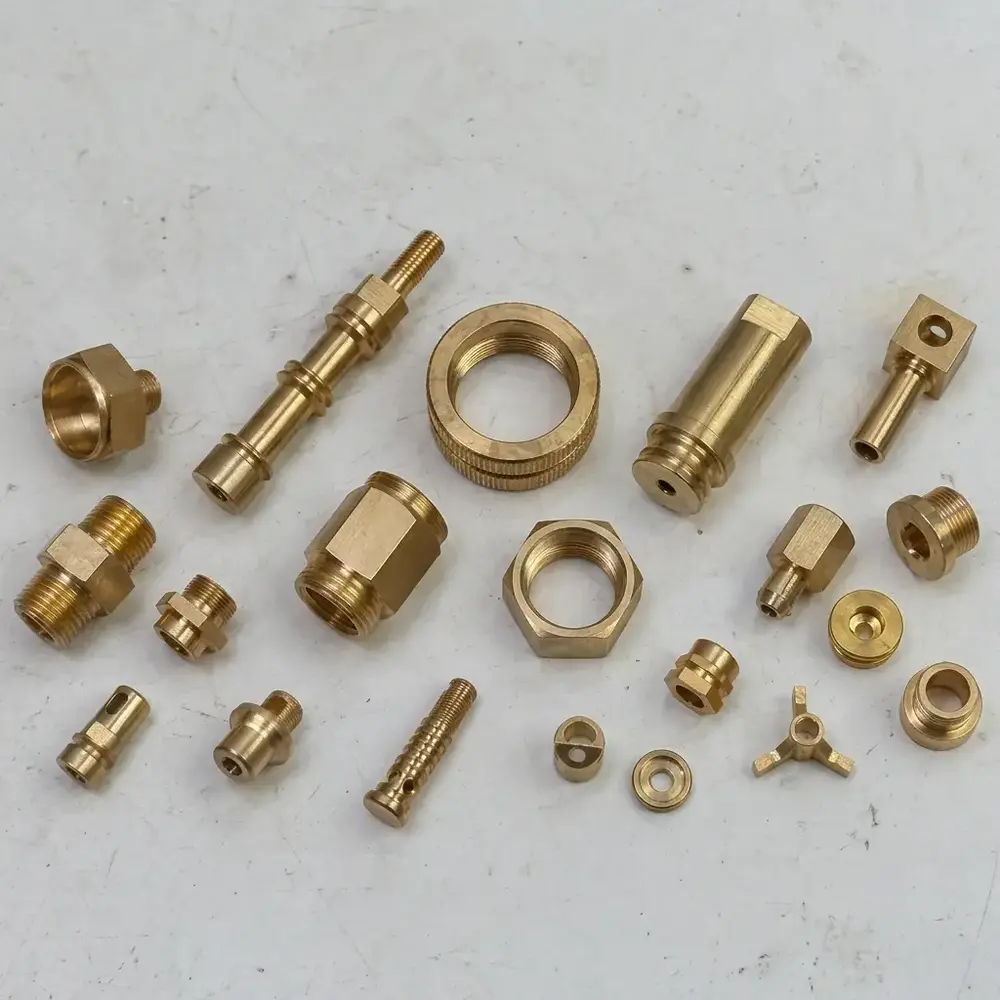
Brass Precision Turning Parts from dipak sales are drawing-based machined components produced through precision turning and suitable secondary operations.
Profiles, bores, threads, grooves, tolerances, brass grade and finishing can be defined for OEM and industrial applications.
Brass Precision Turning Parts for Repeatable Machined Components
Brass Precision Turning Parts are machined components in which the final profile is produced around a controlled axis of rotation. dipak sales manufactures precision metal components for OEM and industrial requirements, with turning supported by additional operations when a part needs holes, threads, milled features or other secondary details.
The value of a turned component is often in the relationship between several small dimensions. A shaft diameter may have to align with a bore, a thread may have to meet a mating part, or a shoulder may locate another component. For that reason, the drawing is treated as the definition of the part rather than simply a reference image.
What Can Be Machined on a Turned Part?
A brass turned component can be developed with a combination of:
- External diameters and stepped profiles
- Internal bores and counterbores
- External or internal threads
- Grooves and retaining features
- Chamfers and controlled edge details
- Cross holes or other secondary machined features
The actual feature set depends on the customer drawing. dipak sales can review the geometry and select the appropriate combination of turning and secondary operations.
Material Is Part of the Drawing
The company's material expertise includes lead-free brass alloys, low-lead brass alloys, ETP Copper, Aluminum, Phosphor Bronze and copper alloys. For a brass precision turning part, the approved alloy and relevant material standard should be specified with the component requirement.
This drawing-led approach is useful for OEM parts because a change in brass grade can affect the manufacturing and procurement requirement. The component should therefore be produced against the agreed material specification rather than a generic “brass” description.
Turning Plus the Operations the Part Actually Needs
| Part requirement | Possible manufacturing route |
|---|---|
| Round external profile | Turning or precision turning based on the drawing. |
| Internal bore | Drilling, boring or related machining as required. |
| Threaded feature | Tapping or other suitable thread operation according to the design. |
| Flat or shaped secondary feature | Milling or another secondary machining operation. |
| Specified surface treatment | Plating, coating, buffing, anodizing or other applicable finishing process. |
dipak sales also documents drilling, milling, tapping, centerless grinding, heat treatment and annealing, vibratory bowl finishing, buffing, part finishing, plating and coating among its services.
Made for Assemblies, Not Just for the Machine
Precision brass turned parts can become the functional link between multiple components. They may be used as connectors, threaded pieces, inserts, spacers, bushes, shafts, pins or other engineered components depending on the customer's design. Jamnagar manufacturers similarly present precision turned brass parts around electrical, automotive, hydraulic, pneumatic and general engineering applications.
The final application determines which characteristics matter most. dipak sales therefore does not assign a universal tolerance, load rating or dimensional range to every turned part without the supporting drawing.
Repeat Production Needs a Stable Reference
For recurring OEM supply, the approved drawing can define the critical dimensions, threads, material and finish that need to remain consistent. This gives production and inspection teams a common reference when the same part is manufactured again.
Dimensional Inspection of Turned Components
dipak sales is certified to ISO 9001:2015 for the manufacture of precision metal components. Its documented measurement resources include digital micrometers, vernier calipers, height gauges, depth gauges, dial indicators, bore gauges, thread plug gauges, thread ring gauges, digital measuring instruments and alignment measuring tools.
Inspection can be directed toward the dimensions that affect the part's fit and function, including diameters, lengths, bores, threads, shoulders and other critical features identified on the approved drawing.
A Better Starting Point for a Turning-Part RFQ
Send the 2D drawing, 3D model, sample or specification together with the material grade, critical tolerances, thread details, finish and estimated quantity. If the part is already in production elsewhere, information about the mating component can also help clarify which dimensions are functionally important.
Frequently Asked Questions
Can brass precision turned parts be manufactured from a 2D drawing?
Yes. Drawing-based manufacturing is supported, with the geometry, material and critical dimensions reviewed before production.
Can a turned brass component have additional drilled or milled features?
Yes. Turning can be combined with drilling, milling, tapping and other secondary operations when the component design requires them.
Are repeat OEM orders supported?
The manufacturing approach is suitable for repeat production when an approved component definition and inspection requirements are established.
