
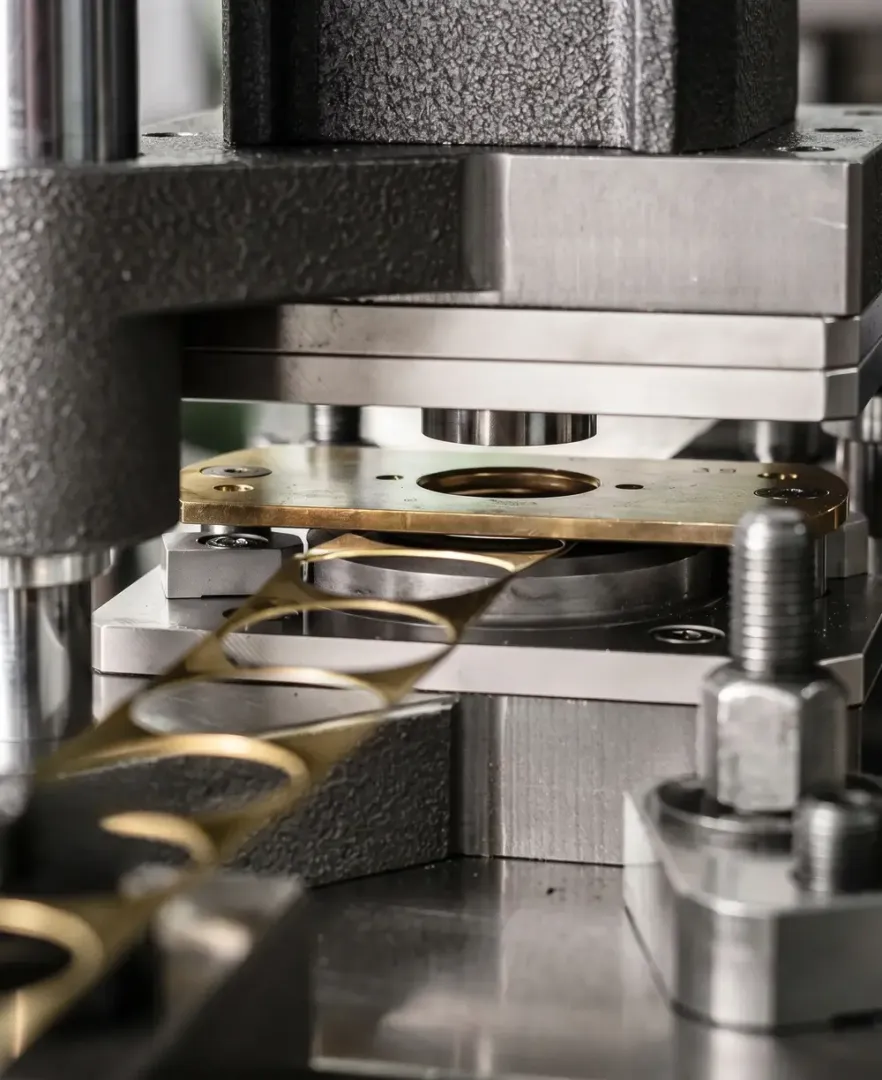
Sheet Metal Stamping
Sheet Metal Stamping is used to form sheet material into defined component shapes through controlled press operations. At Dipak Sales, it is one of our listed manufacturing services for customer-specific metal components produced according to drawings and specifications.
Stamping can be useful for repeat production where a sheet-based component contains defined profiles or formed features. Our documented material expertise includes ETP copper, aluminium, phosphor bronze, lead-free brass alloys, low-lead brass alloys and copper alloys.
Sheet Metal Stamping for Formed Components
Sheet metal stamping uses tooling and press force to cut, shape or form sheet material into a required profile. It is particularly relevant to repeat components where the geometry is established by the tooling and the customer drawing.
Typical Stamping Features
- Cut profiles from sheet material
- Formed tabs and bends
- Flat stamped components with defined outlines
- Repeated production of small metal parts
- Features prepared for later joining or assembly
Material Selection
Dipak Sales has documented expertise with ETP copper, aluminium, phosphor bronze, lead-free brass alloys, low-lead brass alloys and copper alloys. The material grade, sheet condition and required geometry should follow the customer's approved specification.
Why Stamping Is Used for Repeat Production
Once suitable tooling and process conditions are established, stamping can provide a consistent way to reproduce the same sheet profile across production batches. This makes the process relevant to components where repeatability and production efficiency are important.
Inspection of Stamped Components
Dipak Sales lists vernier calipers, digital micrometers, height gauges, depth gauges, dial gauges, digital measuring instruments and alignment measuring tools among its inspection resources. These tools support applicable dimensional checks against the component requirement.
Integration With Other Operations
Stamped parts may require additional manufacturing stages depending on the finished design. Dipak Sales also lists riveting, assembly, finishing, coating and packing capabilities, allowing stamping to form one stage within a wider component production route.
