
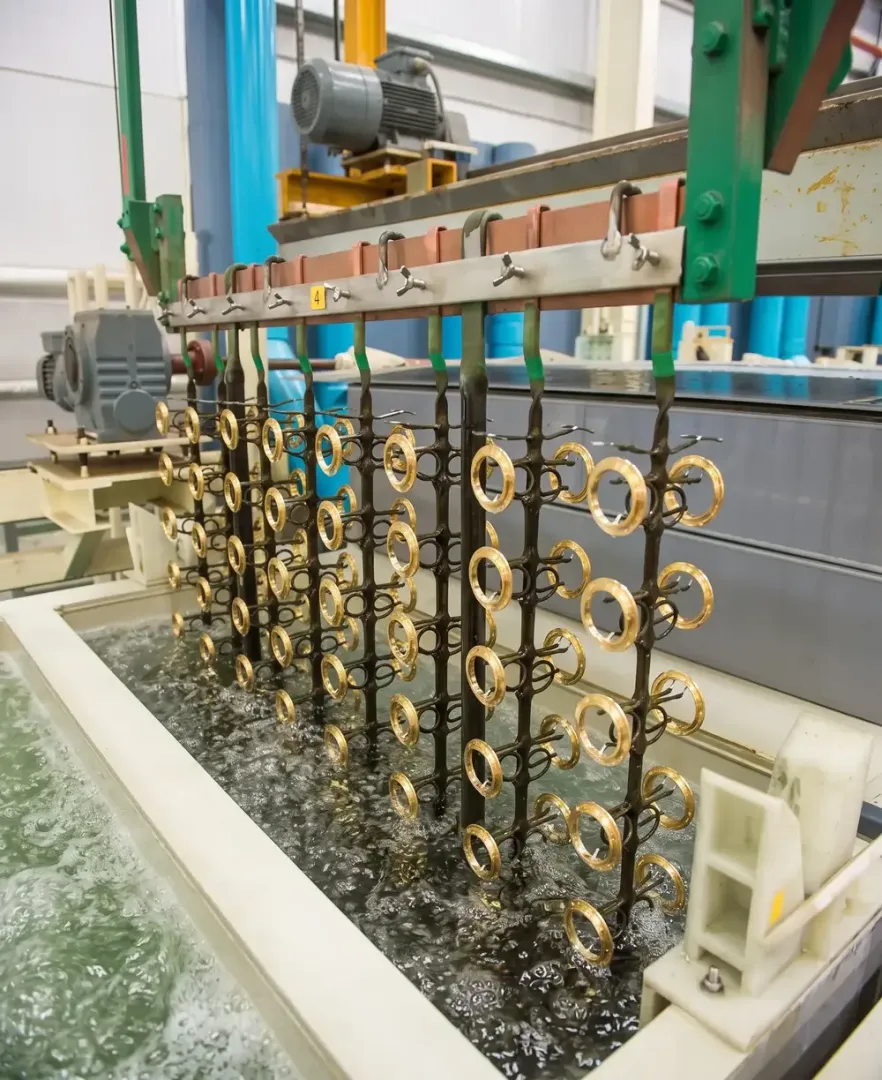
Plating Process
Plating Process is used to give precision metal components a specified metallic surface finish for appearance, surface protection or application requirements. The plating specification is selected around the component material, geometry and customer requirements.
Dipak Sales can incorporate plating into the finishing route for precision metal components, with suitable surface preparation and inspection considered alongside the manufacturing process.
Plating Process for Metal Components
Plating is a finishing stage in which a metallic layer is applied to the component surface. For precision parts, the required finish needs to be considered together with the base material, dimensions and functional requirements.
Before Plating
The component surface is prepared according to the specified finish. Machining, deburring, buffing or other applicable finishing operations may be used before plating when required.
Material-Based Requirements
Dipak Sales manufactures components from ETP Copper, Aluminum, Phosphor Bronze, lead-free brass alloys, low-lead brass alloys and copper alloys. The suitable plating requirement depends on the selected material and customer specification.
Plating Inspection
Where specified, plated parts can be checked for surface condition, dimensions and coating thickness. Available equipment includes coating thickness gauges, digital micrometers, vernier calipers and thread gauges.
Finishing Integration
Plating can be coordinated with turning, drilling, milling, tapping, precision machining, centerless grinding, vibratory bowl finishing, buffing and part finishing as part of the completed component route.
