
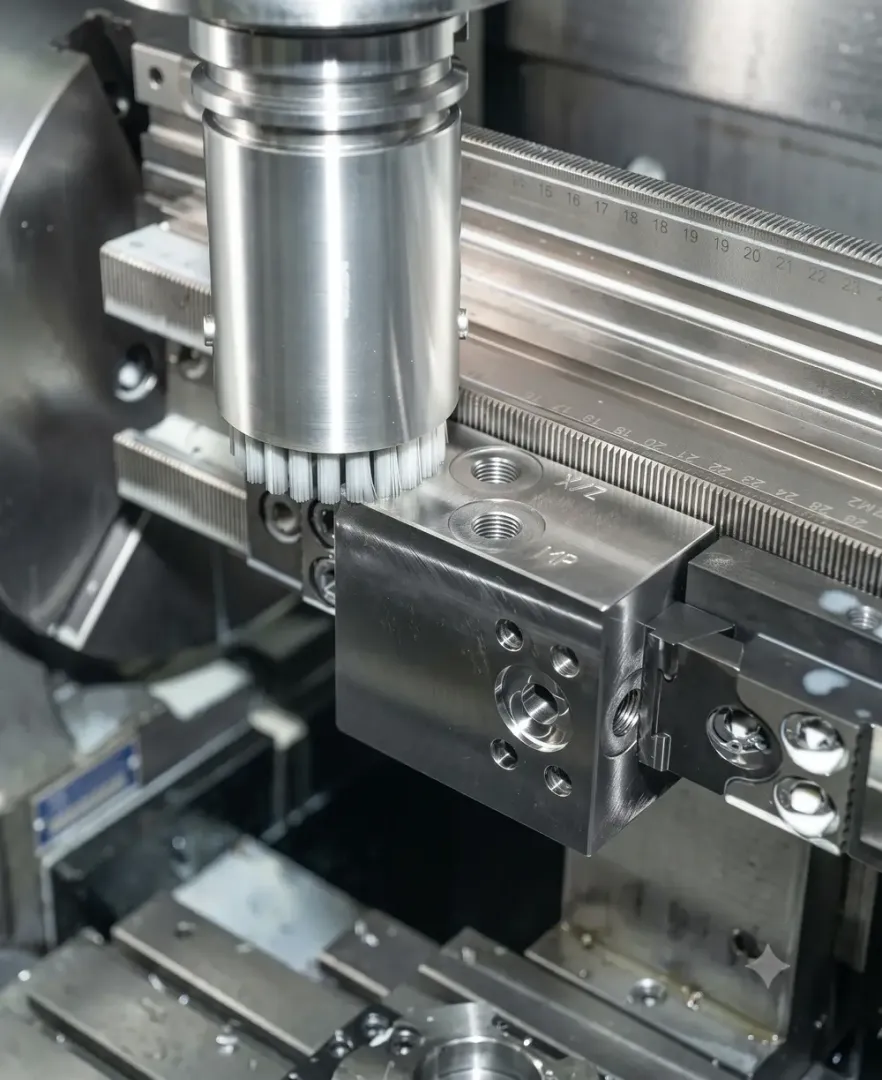
Part Finishing
Part Finishing at Dipak Sales covers finishing stages applied to manufactured metal components after their primary forming or machining operations. The objective is to bring the component to the surface, appearance or functional condition defined by the customer.
Part finishing is listed separately within our expertise alongside buffing, vibratory bowl finishing, anodizing, plating, lacquer finish, powder coating and other coating processes, allowing the finishing route to be selected according to the complete component requirement.
Finishing Solutions for Manufactured Components
A finished component often needs more than its basic machined or formed geometry. Surface condition, appearance, edge condition and preparation for a subsequent coating or assembly stage can all influence the final part. Part finishing provides the manufacturing stage where these requirements are addressed.
Finishing Requirements We Can Address
- Surface preparation after machining or forming
- Removal or refinement of residual manufacturing marks
- Preparation before plating or coating
- Appearance-focused finishing for visible component surfaces
- Finishing routes for repeat production components
Choosing the Right Finishing Route
The appropriate process depends on the component material, geometry, existing surface condition and required final result. A part may require mechanical finishing, vibratory processing, buffing, anodizing, plating, lacquer, powder coating or another coating process depending on the specification.
Materials
Our documented material expertise includes ETP copper, aluminium, phosphor bronze, lead-free brass alloys, low-lead brass alloys and copper alloys. Material compatibility is considered when determining the applicable finishing sequence.
Inspection and Process Verification
Dipak Sales lists digital micrometers, vernier calipers, height gauges, depth gauges, dial gauges, bore gauges, coating thickness gauges, digital measuring instruments and other measurement equipment. Third-party hardness and chemical composition testing are also available where applicable.
Integrated Component Manufacturing
Part finishing can be positioned after turning, drilling, milling, tapping, forging, casting, stamping, grinding or other manufacturing stages. It can then be followed by assembly and packing when the customer's requirement calls for a completed component or assembly.
