
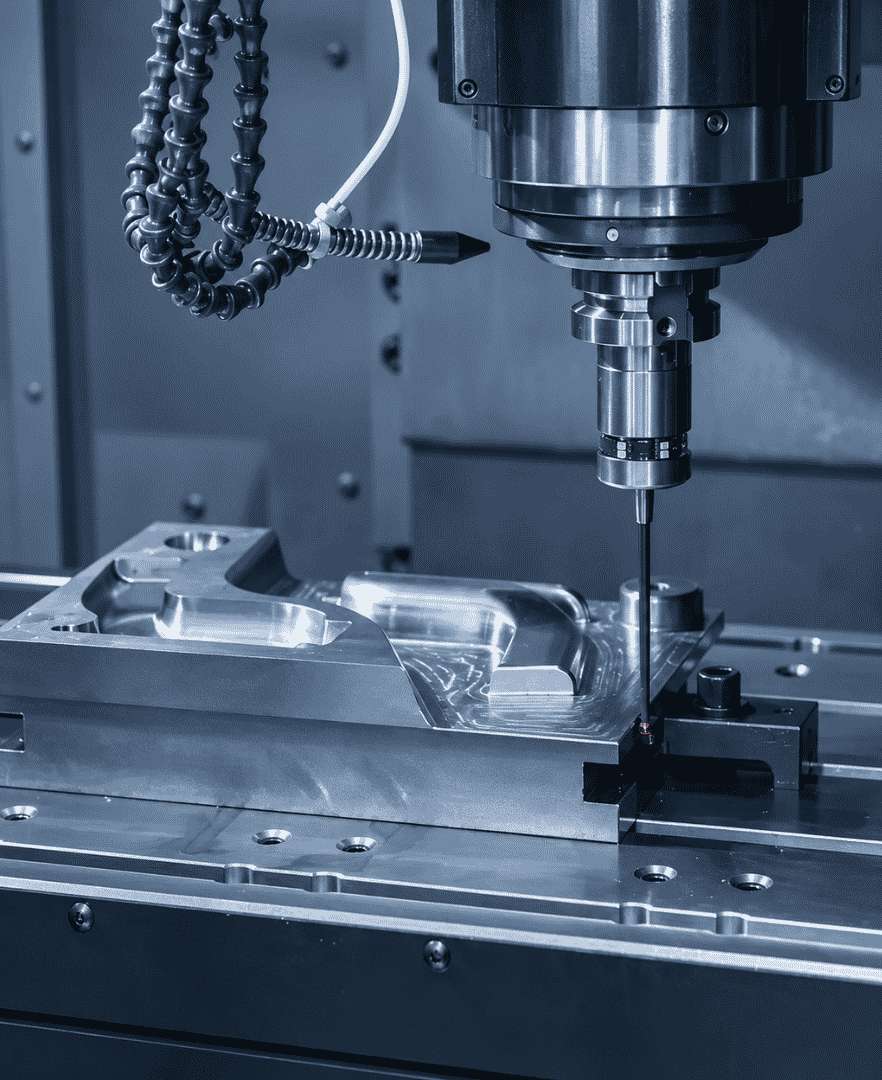
Milling Service
Milling Service at Dipak Sales is intended for metal components that require machined surfaces or features beyond a basic rotational profile. Milling can create flats, steps, slots, pockets and defined profiles in accordance with the customer's drawing.
Our precision metal component work includes ETP copper, aluminium, phosphor bronze, lead-free brass alloys, low-lead brass alloys and copper alloys. Milling may be used as a primary operation or as a secondary operation on a component produced through another machining process.
Milling for Defined Component Features
Milling uses a rotating cutting tool to remove material from selected areas of a workpiece. Unlike a primarily rotational operation, it is useful when the drawing contains flat, stepped or profiled features that need controlled material removal.
Typical Milling Features
- Flat machined surfaces
- Steps and shoulders on non-rotational areas
- Slots and cut features
- Pockets and recessed sections
- Defined profiles and shaped surfaces
- Secondary machined features on turned components
When Milling Complements Turning
A component may begin as a rotational part and later require a flat, slot or other localized feature. In such cases, milling can be incorporated into the wider machining route instead of treating the feature as a separate sourcing requirement.
Materials in Our Manufacturing Scope
Dipak Sales has documented expertise with ETP copper, aluminium, phosphor bronze, lead-free brass alloys, low-lead brass alloys and copper alloys. Material characteristics and the customer's specification remain important inputs when determining the machining approach.
Inspection Support
Dimensional verification is supported by equipment listed in our company profile, including height gauges, digital micrometers, vernier calipers, depth gauges, dial gauges, bore gauges, digital measuring instruments and alignment measuring tools. Additional third-party testing is available for applicable hardness and chemical composition requirements.
For Complex and Repeat Requirements
Dipak Sales states that its continuously upgraded technologies and technical team support complex and mass-production requirements. Milling can therefore form part of a broader component route that also includes turning, drilling, tapping, finishing and assembly.
