
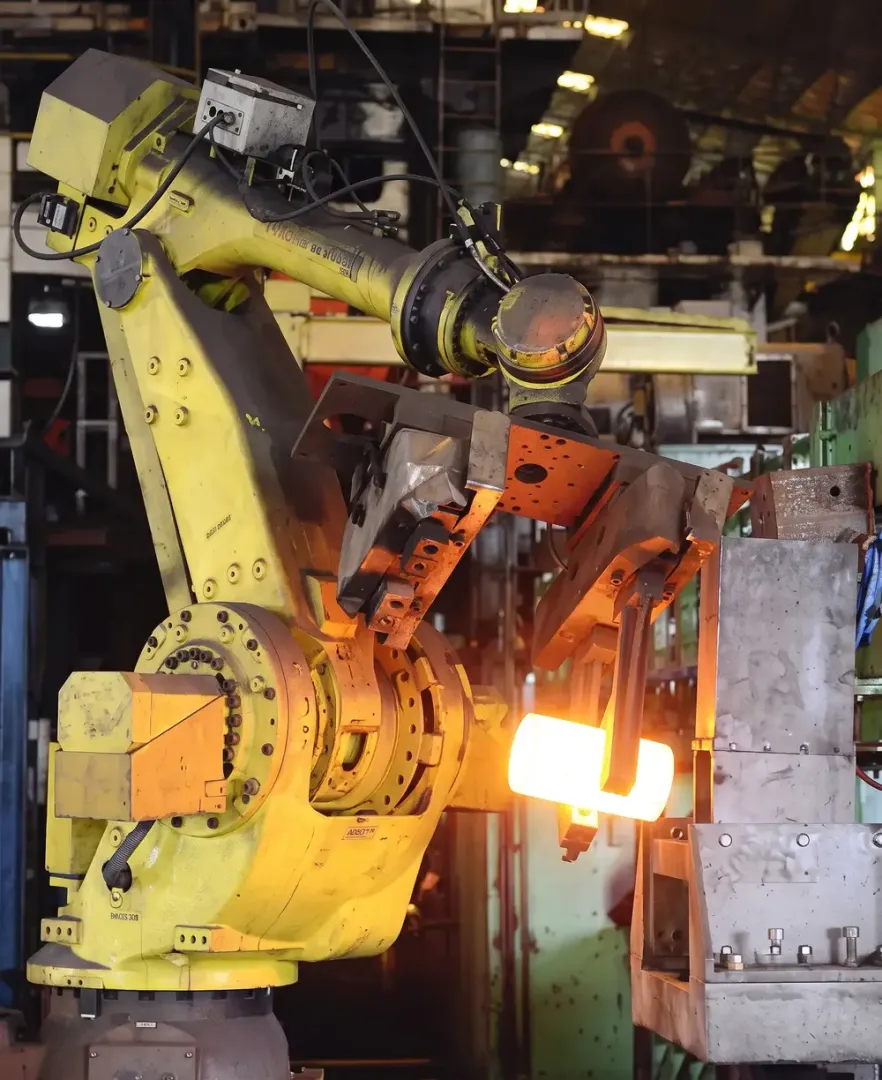
Hot Forging
Hot Forging is a metal forming process in which the work material is heated before controlled deformation. At Dipak Sales, hot forging is part of our listed manufacturing expertise for customers requiring formed metal components to defined drawings and specifications.
Our documented material expertise includes ETP copper, aluminium, phosphor bronze, lead-free brass alloys, low-lead brass alloys and copper alloys. The suitable forging route depends on the component geometry, material and production requirement.
Hot Forging for Formed Metal Components
Hot forging uses elevated temperature to make metal more workable before it is shaped under compressive force. Heating can make substantial shape changes more practical and can support components with defined forged profiles.
When Hot Forging Is Considered
- Components requiring substantial material deformation
- Forged shapes that are difficult to produce efficiently by cold forming
- Parts where the material and geometry suit a heated forming route
- Repeat production of defined forged component shapes
- Components intended for machining or finishing after forging
Material Considerations
Dipak Sales documents expertise in ETP copper, aluminium, phosphor bronze, lead-free brass alloys, low-lead brass alloys and copper alloys. Material selection remains subject to the customer drawing and specification.
From Forged Blank to Finished Component
Hot forging can establish the initial geometry before subsequent operations bring the part to its required condition. Depending on the drawing, this may involve machining, drilling, milling, tapping, heat treatment, finishing, coating or assembly.
Quality and Verification
Dipak Sales lists digital micrometers, vernier calipers, height gauges, depth gauges, dial gauges, bore gauges and digital measuring instruments. Where applicable, hardness testing and chemical composition analysis are supported through third-party facilities.
Production Requirements
Dipak Sales states that its continuously upgraded technologies and technical team support complex and mass-production requirements. Hot forging can therefore form part of a broader manufacturing route.
