
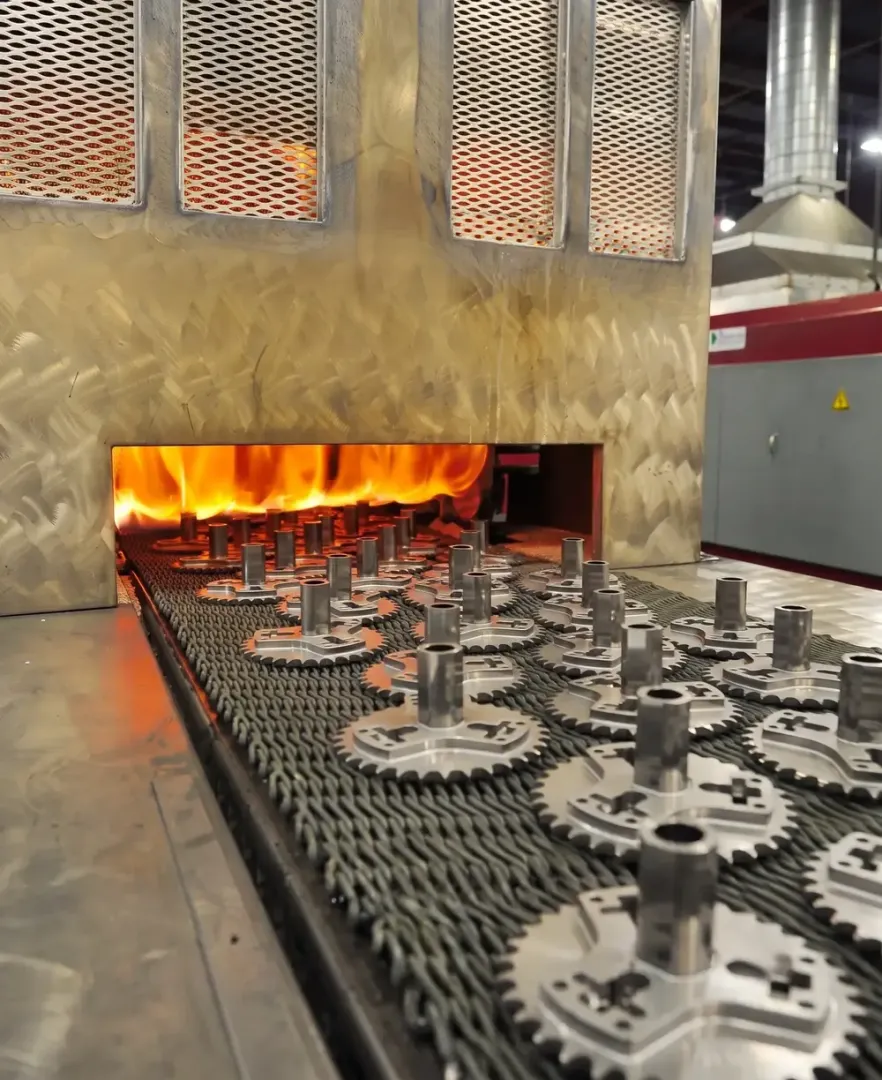
Heat Treatment & Annealing
Heat Treatment & Annealing is a thermal processing stage used to modify the condition of a metal component according to its material and manufacturing requirements. At Dipak Sales, heat treatment and annealing are listed among our manufacturing services for customer-specific precision metal components.
The appropriate thermal route depends on the material, preceding manufacturing operations and required final condition. It should therefore be defined against the applicable drawing, material specification or customer requirement rather than treated as a generic finishing step.
Thermal Processing for Metal Components
Heat treatment involves controlled heating and cooling of a material to achieve a required metallurgical or mechanical condition. Annealing is one type of thermal treatment used to alter the condition of a material and can be considered where the manufacturing sequence calls for a more workable or specified material state.
Why Heat Treatment May Be Required
- To achieve a customer-specified material condition
- To support the manufacturing sequence after forming or machining
- To prepare material for subsequent processing
- To address requirements linked to the component's application and specification
- To form part of a defined production route for repeat components
Process Depends on Material
Dipak Sales has documented expertise in ETP copper, aluminium, phosphor bronze, lead-free brass alloys, low-lead brass alloys and copper alloys. Each material responds differently to thermal processing, so the required treatment should be established from the approved material and process specification.
Verification and Testing
Our company profile lists a hardness tester through a third-party facility and chemical composition analysis through a third-party facility. Dimensional inspection resources include digital micrometers, vernier calipers, height gauges, depth gauges, dial gauges and other measuring equipment.
Integrated Manufacturing Route
Heat treatment and annealing can sit between other manufacturing stages rather than being considered in isolation. Depending on the component, the wider route may include forging, casting, turning, drilling, milling, tapping, grinding, finishing, coating or assembly.
Specification-Led Production
Dipak Sales supports complex and mass-production requirements through its technical team and continuously upgrading technologies. The thermal process should be selected and controlled according to the customer's material, drawing and application requirements.
