
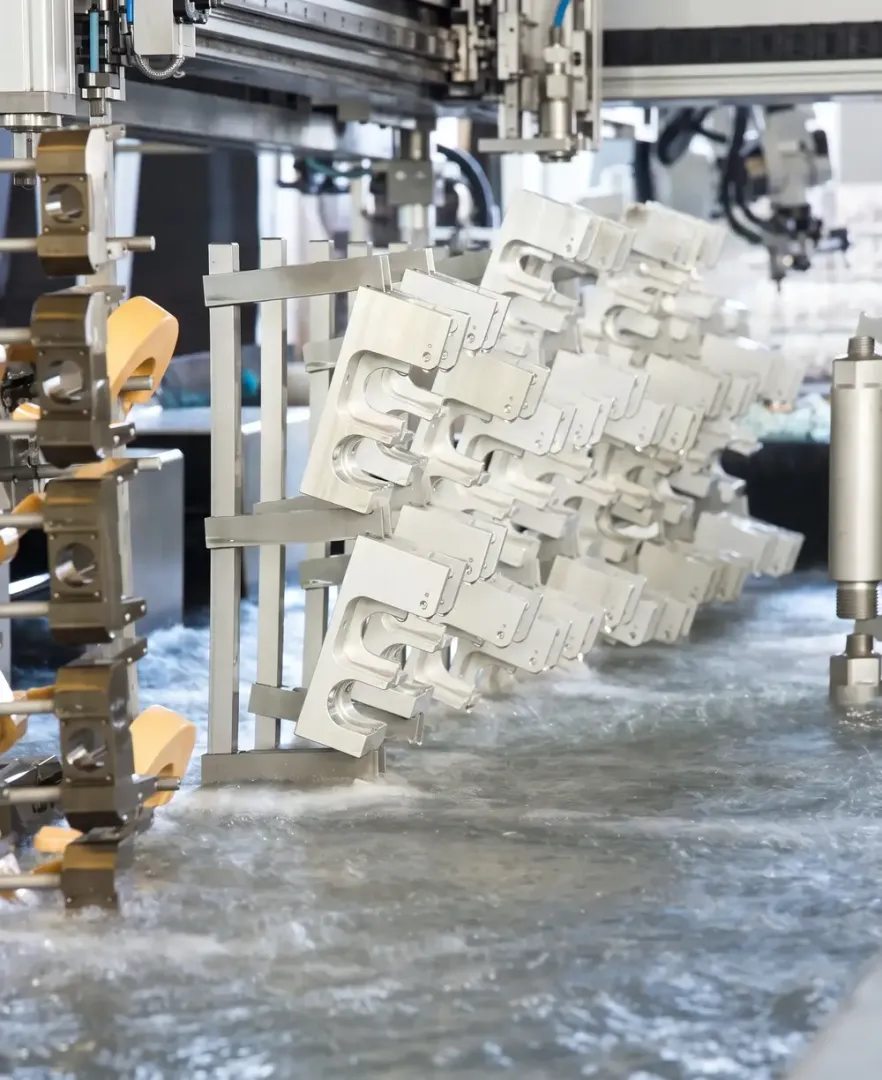
Anodizing
Anodizing is a surface-treatment process used primarily for suitable metal substrates where a controlled oxide layer is required on the component surface. At Dipak Sales, anodizing is listed among our finishing and surface-treatment capabilities for customer-specific components.
The anodizing route depends on the substrate, required finish and application. Because anodizing is a surface treatment rather than a general-purpose coating for every metal, material compatibility must be established from the customer's drawing or specification.
Anodizing for Surface-Treated Components
Anodizing creates a controlled oxide layer on a suitable metal surface through an electrochemical process. For compatible components, the treatment can be used to achieve a specified surface condition and can also provide a foundation for the required appearance or protective performance.
When Anodizing Is Considered
- Aluminium components requiring a defined surface treatment
- Parts where surface appearance is part of the specification
- Components requiring a controlled treated surface before final assembly
- Machined parts where the surface treatment must follow the manufacturing stage
- Repeat components requiring consistent finishing requirements
Material Compatibility Comes First
Dipak Sales documents expertise in ETP copper, aluminium, phosphor bronze, lead-free brass alloys, low-lead brass alloys and copper alloys. Anodizing should be selected only where the substrate and required treatment are compatible with the customer's specification.
Surface Preparation
The final anodized result depends on the condition of the component before treatment. Machining marks, surface preparation, protected features and dimensional requirements should therefore be considered before the finishing stage.
Inspection and Finish Control
Our listed equipment includes coating thickness gauges, digital measuring instruments, digital micrometers, vernier calipers and other dimensional inspection tools. These resources support applicable checks of the finished component and treated surfaces.
Part of a Complete Production Route
Anodizing can follow machining, grinding or other preparation operations and can be coordinated with assembly or packing. Dipak Sales also lists plating, lacquer finish, powder coating and other coating processes within its broader finishing capability, allowing the surface-treatment route to be matched to the component requirement.
